Source CCTV Camera Power Supply for Security Systems, IP Cameras, and Outdoor Surveillance
Compare 30 verified CCTV camera power supply options with input voltages from 100-240VAC and output ranges up to 150W. Buyers can evaluate models like YSP40 and YSI-150 for single output configurations suitable for various security applications.
Key considerations
Products List






Comprehensive Sourcing Guide
Strategic Sourcing Guide for CCTV Camera Power Supply Solutions
Understanding Technical Specifications and Output Variability
When sourcing CCTV camera power supplies, buyers must first navigate a landscape of diverse technical specifications that directly impact system reliability and compatibility. The core requirement for these devices is the conversion of standard alternating current (AC) mains voltage into a stable direct current (DC) suitable for surveillance equipment. Based on available market data, the input voltage for these units typically spans a wide range of 100-240VAC at 50/60Hz, ensuring global adaptability without the need for external transformers. This universal input capability is a critical baseline for any procurement strategy targeting international deployment.
However, the output specifications vary significantly depending on the specific model and intended application. The observed output voltage ranges are not uniform; some units offer a narrow range of 12V, while others provide adjustable outputs spanning 5-24V, 5-36V, or even a broader 5-48V spectrum. This variability necessitates a precise match between the power supply and the camera's voltage requirements. For instance, a standard 12V camera requires a supply that can maintain that specific potential, whereas a system utilizing PoE (Power over Ethernet) or variable voltage cameras may require a unit capable of delivering 12-55V or 5-48V.
The power output capacity is another critical differentiator. The market presents units with maximum power ratings ranging from 12W to 150W, with some categories indicating output power capabilities between 101-200W. Correspondingly, the output current varies from as low as 0.01A to as high as 12A. A buyer must calculate the total wattage of all connected cameras and add a safety margin, typically 20%, to ensure the selected power supply does not operate at its thermal limit. For example, a 150W unit with an output current range of 0.1-12A is suitable for high-density installations, whereas a 24W unit with 0.1-1.5A output is better suited for small, single-camera setups.
Physical dimensions and weight also play a role in installation logistics. Observed sizes range from compact units measuring 6447.528mm to larger enclosures at 1609937mm. The net weight (N.W.) similarly fluctuates, with lighter models around 76g and heavier industrial units reaching 450g. These physical attributes influence the choice of mounting location, particularly in confined spaces or when deploying multiple units in a single rack.
Compliance, Certification, and Safety Standards
Ensuring that a CCTV power supply meets international safety and electromagnetic compatibility standards is non-negotiable for professional installations. The supply chain for these components often includes a comprehensive suite of certifications that validate the product's adherence to global safety norms. Buyers should verify that the units they procure carry recognized marks such as GS, CE, EMC, SAA, FCC, CB, PSE, CCC, RoHS, and Reach. These certifications are not merely marketing labels; they indicate that the product has undergone rigorous testing for electrical safety, electromagnetic interference, and hazardous substance restrictions.
The presence of these certifications is particularly vital for projects in regulated markets. For example, the FCC certification is essential for sales in the United States, while the CE mark is mandatory for the European Economic Area. The CCC (China Compulsory Certification) is required for products sold within China, and the PSE mark is specific to the Japanese market. A lack of these specific certifications can lead to customs seizures, legal liabilities, or the rejection of the product by local authorities.
Furthermore, specific electrical safety parameters must be observed. Leakage current is a critical metric for preventing electric shock hazards. Data indicates that high-quality units maintain a leakage current of 0.25mA Max at 264VAC input, a figure that aligns with strict safety thresholds. Additionally, inrush current protection is necessary to prevent tripping circuit breakers during startup. Some units are designed to handle an inrush current of up to 30 AMPS Max at 230VAC/50Hz under full load, which is a crucial specification for systems with multiple cameras powering up simultaneously.
Buyers must also consider the environmental operating conditions. The working humidity range for reliable units is typically 5%-90% Rh Non-Condensing, ensuring functionality in various climates from arid deserts to humid tropical regions. The lifespan of the internal components is another factor, with many manufacturers offering a warranty or life expectancy of 3-5 years, which serves as a benchmark for long-term reliability.
Cost Drivers and Pricing Dynamics
The pricing of CCTV power supplies is influenced by a complex interplay of factors, including power capacity, certification levels, customization options, and packaging requirements. The observed price range in the market spans from $1 to $500, reflecting the vast difference between a basic 12W adapter and a high-capacity 150W industrial unit. It is important to note that price does not always correlate linearly with quality; a higher price often reflects the inclusion of advanced safety features, robust certification documentation, or specialized customization services.
Customization is a significant cost driver. Many suppliers offer OEM/ODM services, allowing buyers to tailor the product's appearance, labeling, and even internal components to their specific brand or project needs. While this adds value, it may also increase the unit cost and the Minimum Order Quantity (MOQ). The observed MOQ range is broad, extending from 1 unit to 1000 units. Small orders may incur a higher per-unit cost due to setup fees, whereas bulk purchases can leverage economies of scale to reduce the price significantly.
Packaging and logistics also contribute to the final cost. Standard packaging varies from simple PE bags and white boxes to bulk cartons containing 20 or 100 units. For instance, a carton containing 20 units might measure 403020cm, while another configuration could be 34.524.522.5cm. The density of the packaging affects shipping costs, which are a hidden but substantial component of the total procurement budget. Buyers should evaluate the trade-off between unit price and shipping efficiency, especially for large-scale deployments where freight costs can outweigh the savings on the hardware itself.
Typical Applications and Installation Scenarios
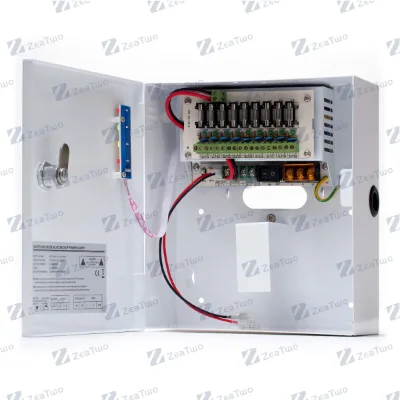
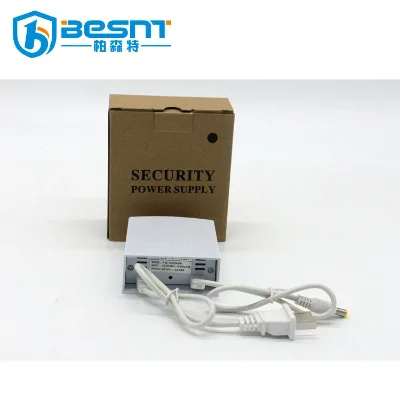
CCTV power supplies are deployed in a wide array of scenarios, from residential security to large-scale industrial monitoring. The choice of power supply depends heavily on the scale of the installation and the type of cameras used. For small-scale applications, such as a single home security camera, a compact 12W or 24W unit with a simple plug-in connection is often sufficient. These units are lightweight, typically weighing around 120g or less, and are easy to install in standard electrical outlets.
In contrast, commercial and industrial installations often require centralized power solutions. A 150W unit, such as the model designated YSI-150, is designed to power multiple cameras simultaneously. These units often feature a single output type but are built to handle higher currents, up to 12A, ensuring that all connected devices receive stable power even under peak load conditions. The larger physical dimensions of these units, such as 1609937mm, accommodate the necessary heat dissipation components required for continuous operation.
The "Plug In" connection method is a standard feature across most models, simplifying the installation process by eliminating the need for hardwiring. However, for PoE (Power over Ethernet) applications, the power supply must be compatible with the network infrastructure. The model YSP40, for example, is categorized under PoE Power Supplies, indicating its ability to deliver power over Ethernet cables to compatible cameras. This integration reduces the need for separate power cabling, streamlining the installation in large facilities.
Supplier Evaluation and Service Capabilities
Evaluating a supplier for CCTV power supplies requires a focus on their service capabilities, particularly regarding OEM/ODM support and warranty terms. The availability of OEM/ODM services indicates that the supplier is flexible and capable of meeting specific branding or technical requirements. This is crucial for buyers who need to integrate the power supply into a larger ecosystem or who require custom labeling for their brand.
Warranty terms are another key indicator of supplier confidence. The observed warranty period for these products ranges from 3 to 5 years, with some suppliers offering "Alternative" warranty options. A longer warranty period suggests that the manufacturer stands behind the durability of their product and is prepared to handle potential failures. Buyers should verify the specific terms of the warranty, including what is covered and the process for claims, to ensure adequate protection for their investment.
Geographic origin is also a factor in supplier evaluation. Many of these products originate from Zhejiang, China, a region known for its robust manufacturing infrastructure. While this location offers competitive pricing and high production capacity, buyers should also consider the logistics of shipping and the potential for lead time variations. The sample availability is another positive indicator; many suppliers offer free samples, allowing buyers to test the product's quality and performance before committing to a large order.
Quality Control and Long-Term Procurement Considerations
Maintaining quality control throughout the procurement process is essential for ensuring the long-term reliability of the CCTV system. Buyers should implement a rigorous inspection protocol that includes verifying the physical dimensions, weight, and packaging integrity of the delivered units. Discrepancies in these attributes can indicate manufacturing defects or the use of substandard materials. For example, a unit that is significantly lighter than the specified 260g or 450g might lack necessary shielding or cooling components.
Long-term procurement considerations also involve the scalability of the supply chain. As the surveillance network expands, the ability to source additional units with consistent specifications becomes critical. Buyers should establish a relationship with a supplier who can maintain consistent quality over time and provide a steady supply of products that match the original specifications. This includes ensuring that the output voltage, current, and power ratings remain stable across different production batches.
Furthermore, the lifecycle of the power supply should be factored into the procurement strategy. With a typical life expectancy of 3-5 years, buyers should plan for periodic replacements or upgrades. The availability of spare parts and the ease of replacement are important factors to consider. A supplier that offers a clear replacement policy and maintains a stock of common models can significantly reduce downtime in the event of a failure.
Comparative Analysis of Key Product Models
To assist in the selection process, the following table compares key attributes of the observed product models. This comparison highlights the differences in power capacity, physical size, and output specifications, aiding buyers in making informed decisions based on their specific project requirements.
| Model Designation | Max Power | Output Voltage Range | Output Current Range | Net Weight | Dimensions (mm) | Primary Application |
|---|---|---|---|---|---|---|
| YSP40 | 36W | 12-55V | 0.1-4A | 260g | 1206036 | PoE Systems |
| YSI-150 | 150W | 5-48V | 0.01-12A | 450g | 1609937 | High-Density CCTV |
| YSP18 | 24W | 5-24V | 0.1-1.5A | 120g | 1135432 | Small Installations |
| YS12U | 12W | 5-36V | 0.1-2A | 76g | 692738 | Single Camera |
This table illustrates the trade-offs between power capacity and physical size. The YSI-150 offers the highest power output and current capacity, making it ideal for large-scale deployments, while the YS12U is the most compact and lightweight, suitable for small, single-camera setups. Buyers should select the model that best aligns with their specific power requirements and installation constraints.
Final Procurement Recommendations
In conclusion, sourcing CCTV camera power supplies requires a meticulous approach that balances technical specifications, compliance standards, and cost considerations. Buyers must prioritize units that offer the correct output voltage and current for their specific camera systems, while ensuring that all necessary certifications are present to meet local regulations. The wide range of available options, from compact 12W units to robust 150W industrial models, provides flexibility for various application scenarios.
By carefully evaluating supplier capabilities, including OEM/ODM support and warranty terms, buyers can secure a reliable supply chain that supports the long-term stability of their surveillance infrastructure. Implementing strict quality control measures and planning for the lifecycle of the products will further mitigate risks and ensure optimal performance. Ultimately, a well-informed procurement strategy, grounded in the detailed analysis of product attributes and market data, will lead to successful and cost-effective CCTV deployments.
FAQs
What is the input voltage range for these power supplies?
The input voltage typically spans 100-240VAC at 50/60Hz, ensuring global adaptability. This universal capability allows deployment in various regions without external transformers, supporting stable operation across different electrical standards.
Which output voltage options are available for CCTV cameras?
Available output voltages range from 5V to 55V depending on the specific model. Units may offer fixed 12V outputs or adjustable ranges like 5-24V, 5-36V, and 5-48V to match diverse camera requirements.
Can I find power supplies with specific safety certifications?
Yes, many units carry certifications including GS, CE, EMC, FCC, RoHS, and CCC. These marks validate adherence to international safety norms and electromagnetic compatibility standards required for professional installations in regulated markets.
What is the maximum power output capacity for these units?
Maximum power outputs range from 12W to 150W, with some categories supporting 101-200W. Buyers should calculate total wattage needs and add a safety margin to ensure the selected unit does not operate at thermal limits.
How long is the typical warranty period for these devices?
The warranty period typically ranges from 3 to 5 years, with some suppliers offering alternative terms. This duration serves as a benchmark for long-term reliability and indicates manufacturer confidence in product durability.
Which models support PoE power supply functionality?
Specific models like YSP40 are categorized under PoE Power Supplies for delivering power over Ethernet cables. This integration reduces the need for separate power cabling in large facilities and streamlines the installation process.
What are the physical dimensions and weight of these units?
Dimensions vary from compact 64mm units to larger 160mm enclosures, with weights ranging from 76g to 450g. These physical attributes influence mounting location choices, particularly in confined spaces or rack deployments.